
What are channel letters? They’re individually built, three-dimensional letters, usually aluminum, mounted one by one on a building to spell a business name or logo. Most are illuminated channel letters with LEDs inside. Each letter has metal sides called returns, a face, a back, and often a translucent acrylic front held on with trim cap.
Look up at almost any storefront, shopping center, or office tower, and you’re probably looking at channel letters. They’re the most common permanent business sign in the country, and for good reason: each letter stands on its own, glows at night, and can match a logo almost exactly.
So what are channel letters, exactly, and what are you buying when you order a set? This guide breaks down how they’re built, the main lighting types, how they mount to a wall, how big they need to be, and what to expect from permits and upkeep in Chicago.
- Every letter is its own sign. Each one is fabricated, lit, and mounted separately, which gives depth that flat panels can’t.
- Lighting sets the look. Front lit, halo lit, combination, open-face, and non-lit letters all start from the same can.
- Mounting depends on the wall. Letters go flush on the wall, on a raceway, or on a backer panel.
- Chicago requires drawings. New channel letters need engineered drawings with the permit application.
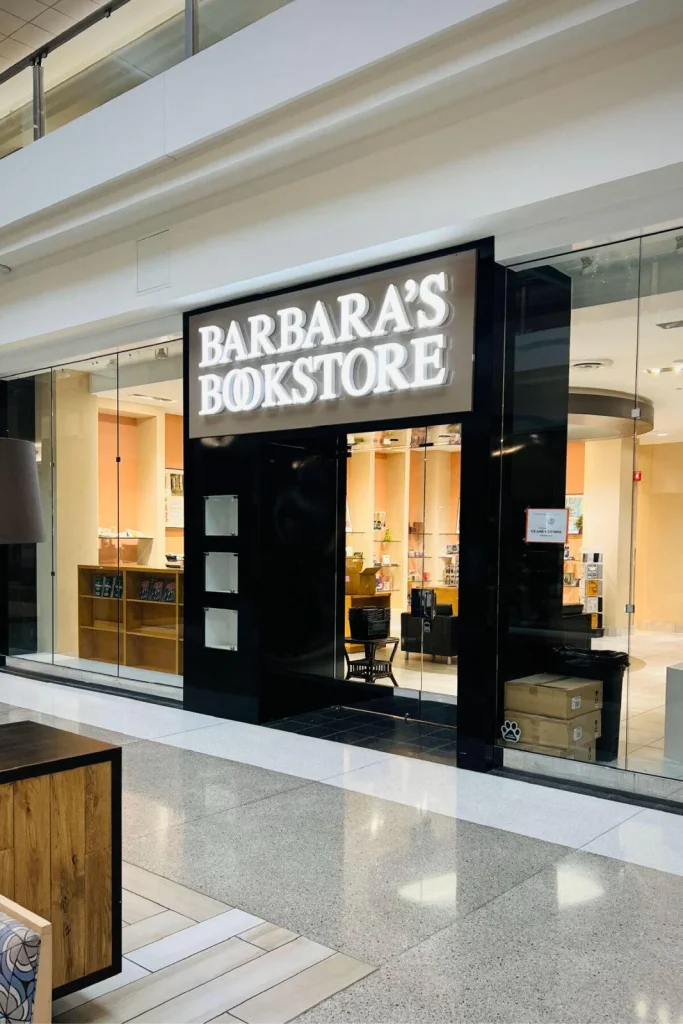
What Are Channel Letters Made Of?
The name comes from the shape. Each letter is a hollow channel, a shallow can built in the outline of the character. The parts are the same for almost every set:
| Part | What it is | What it does |
|---|---|---|
| Returns | The sides of the letter, usually 3 to 5 inches deep | Give the letter its depth and hide the lighting |
| Back | An aluminum panel, or clear polycarbonate on halo letters | Holds the LEDs and attaches to the wall or raceway |
| Face | Translucent acrylic or polycarbonate, or solid metal | Carries the color and shape the viewer sees |
| Trim cap | A plastic edge that wraps the face | Locks the acrylic face to the returns |
| LED modules | Small light strips fixed inside the can | Light the face evenly without hot spots |
| Power supply | A low-voltage transformer, in a raceway or behind the wall | Runs the LEDs from the building’s power |
Aluminum is the standard for returns and backs on illuminated channel letters and non-lit sets alike, because it’s light, rigid, and doesn’t rust. Premium sets use stainless steel or brushed metal faces. The fabrication itself is precise work: faces and backs are cut to the exact letter outline, and the returns are bent to follow every curve and corner before the pieces are joined.
At SignFreaks, that work happens in our own shop. Aluminum is cut and formed, faces are routed, and LEDs are laid out for even brightness before a single letter leaves for the wall.
The Five Types of Channel Letters
All channel letters start from the same can. What changes is how the light gets out, if it gets out at all. Four of the five types below are illuminated channel letters.
1. Front Lit Channel Letters
The classic storefront sign. LEDs inside light a translucent colored face, so the whole letter glows. These illuminated channel letters read farthest at night and match brand colors well, which makes them the default for retail and restaurant signs.
2. Halo Lit Channel Letters
Also called reverse channel letters. The face is solid metal, the LEDs point backward, and the letters sit on standoffs, so light glows on the wall behind them. The effect is refined and works best on smooth, light walls.
3. Combination Lit Channel Letters
A translucent face plus an open back gives you a bright face and a halo at the same time. They’re a common pick for flagship and corporate building signs.
4. Open-Face Channel Letters
The light source is exposed, traditionally neon and now often LED neon or bulbs, for a vintage or marquee look. They suit theaters, bars, and entertainment venues.
5. Non-Illuminated Channel Letters
Dimensional letters with no lighting. They suit daytime businesses, interior lobbies, or exteriors lit by gooseneck lamps. For lobby and wall logos, CNC router signs are a close cousin.
Comparing front lit and halo lit? That’s the decision most buyers get stuck on. Our side-by-side guide to front lit vs halo lit channel letters covers visibility, wall fit, and cost drivers for each.
How Channel Letters Mount to a Building
How the letters attach depends on the wall, the landlord, and what’s behind the facade. There are three common methods.
- Flush mount. Each letter fastens directly to the wall, with wiring passing through behind it. It’s the cleanest look, but it needs access behind the wall and leaves more holes in the facade.
- Raceway mount. The letters sit on a slim metal box that holds the wiring and power supply, painted to match the wall. Fewer wall penetrations make it popular with landlords and leased spaces.
- Backer panel. The letters mount to a painted aluminum or acrylic panel, which mounts to the building. It helps on rough brick, on uneven walls, or when the sign needs a contrasting background.
Our crew checks the wall during the site survey, because the mounting method affects the drawings, the permit, and the price.
Get channel letters sized for your street
SignFreaks measures the wall, checks your town’s sign code and your landlord’s criteria, and shows you the letters to scale on a photo of your building.
How Big Should Channel Letters Be?
Letter height should match the distance your customers read from. The United States Sign Council uses a legibility index, the number of feet of viewing distance per inch of capital letter height, and says an average index of 30 can serve as a general benchmark. By that rule, a 12-inch letter reads from roughly 360 feet in ideal conditions.
Real streets aren’t ideal. The USSC notes that real-world driving cuts legibility by at least 35 percent, and busy, cluttered streets cut it further. All-caps lettering also needs about 15 percent more height. For a sign on a crowded commercial corridor, size up.
Your local sign code sets the ceiling. Most towns cap wall signs by a share of the wall or by square footage, so the right letter is the biggest one the code and the facade allow.
Channel Letters vs Other Business Signs
Channel letters aren’t the only option for a storefront. Here’s how they compare with the signs buyers usually weigh against them:
- Lightbox signs. A lightbox sign is one cabinet with a lit face. It’s simpler and cheaper to update, but some towns limit box signs. Oak Brook, for example, doesn’t allow them in any zoning district, which is covered on the Oak Brook page.
- Blade signs. A blade sign projects from the wall to catch people walking down the sidewalk. Many storefronts pair one with channel letters on the fascia.
- Sign boards. A flat sign board costs less, but it has no depth and usually no lighting.
For the full list, see the guide to the types of business signs.
Permits for Channel Letters in Chicago
Channel letters almost always need a permit. The City of Chicago’s sign permit rules list “installation of new sign boxes or channel letters” among the work that needs drawings from a licensed architect or structural engineer, and a sign installed before its permit is issued is subject to citation. Illuminated letters also need a registered electrical contractor on the application.
SignFreaks prepares the drawings and files the sign permits for every set we build, in the city and the suburbs.
How Long Channel Letters Last
Well-built channel letters are a long-term asset. Aluminum returns don’t rust, LED modules use far less power than the neon they replaced, and individual parts can be swapped instead of replacing the sign.
- Clean faces and returns to keep them bright.
- Check for water in the letters, since moisture can damage LEDs and power supplies.
- Replace dead modules or a failed power supply as soon as a letter dims. Sign repair for channel letters is usually a part swap, not a rebuild.
- When you move or rebrand, professional sign removal takes the letters down and patches the wall.
What Are Channel Letters Worth to Your Business?
Channel letters are the sign that tells people you’re established. They put your name on the building in a form that reads day and night, matches your brand, and lasts for years with simple upkeep. Now that you know what channel letters are and how they’re built, the next step is choosing the lighting, size, and mounting that fit your wall.
SignFreaks designs, permits, builds, and installs channel letters for businesses across Chicago and the suburbs, and you can see finished sets in the portfolio.
Put your name on the building
Tell SignFreaks your address and opening date. We’ll design, permit, build, and install channel letters that read from the street and last for years.
Channel Letters FAQs
What is a channel letter sign?
A channel letter sign is a business sign made of individual three-dimensional letters, each built as a hollow aluminum can and usually lit with LEDs. Together, the letters spell a name or logo on the building. SignFreaks builds channel letters in our own shop.
Why are they called channel letters?
They’re called channel letters because each letter is a hollow channel, a shallow metal can shaped like the character. The channel holds the lighting and gives the letter its depth.
What is the difference between channel letters and a lightbox?
The difference between channel letters and a lightbox is the form. Channel letters are individual letters, while a lightbox sign is a single cabinet with one lit face. Some towns restrict box signs, so the code can decide for you.
Do channel letters need a permit in Chicago?
Channel letters need a permit in Chicago, and new channel letters require engineered drawings with the application. Lit letters also need a registered electrical contractor. SignFreaks handles the sign permits for every set we install.
Can channel letters be installed without lighting?
Channel letters can be installed without lighting. Non-illuminated letters keep the depth of a standard set and suit daytime businesses or interior walls, and they can be lit later from outside if needed.