
The main types of signs for business are channel letters, lightbox signs, blade signs, monument signs, pylon signs, awning signs, sign boards, acrylic signs, dimensional CNC-cut signs, and vinyl banners and window graphics. Most storefronts combine two or three: one primary sign on the building, one for people on the sidewalk, and one for promotions.
A sign is often the first thing a customer learns about your business, and the wrong one costs you twice: once to build it, and again in the customers who walk past. Choosing among the types of signs for business gets easier once you know what each one does best, where it can go, and what your town allows.
This guide covers the 10 types of business signs we’re asked about most, with the setting each one suits, how they compare, and how to build a mix that works for your building. Every type below is one we design, permit, build, and install for businesses across Chicago and the suburbs.
- Match the sign to the viewer. Drivers need large, lit signs, while pedestrians respond to signs at eye level.
- Your town decides first. Zoning codes and landlord criteria limit size, lighting, and even sign type.
- Lit signs work longer hours. Illuminated signs keep selling after dark.
- Combine types. A primary building sign plus a pedestrian sign covers both audiences.
The 10 Types of Signs for Business
Each of these types of commercial signs fills a different role. Some identify the building from the road, some catch foot traffic, and some carry a short-term message.
1. Channel Letters
Channel letters are individual, three-dimensional letters, usually aluminum and lit with LEDs, mounted on the building to spell your name. They’re the most common permanent storefront sign because they read from a distance and match a logo closely. Learn how they’re built in our guide to what channel letters are, or compare the two main lighting styles in halo lit vs front lit channel letters.
Best for retail stores, restaurants, shopping centers, and offices. See channel letters.

2. Lightbox Signs
A lightbox, or cabinet sign, is a single box with a translucent face lit from inside. It’s simpler to build than individual letters, and the face can be swapped when the branding changes. Some towns restrict box signs, though. Oak Brook, for example, doesn’t allow them in any zoning district, a rule covered on the Oak Brook page.
Best for tenant panels, strip centers, and businesses that rebrand often. See lightbox signs.
3. Blade Signs
Blade signs, also called projecting signs, stick out from the wall at a right angle, so people walking down the sidewalk see them from both directions. They’re ideal on dense streets where a flat wall sign is only visible head-on.
Best for cafés, boutiques, and storefronts on pedestrian streets. See blade signs.
4. Monument Signs
Monument signs are low, freestanding signs set on a solid base near a driveway or entrance. Built from masonry, stone veneer, aluminum, or high-density urethane, they signal permanence and help visitors find a building set back from the road.
Best for office parks, medical buildings, schools, and churches. See monument signs.
5. Pylon Signs
Pylon signs are tall, freestanding signs on one or two poles, built to be seen from far away by drivers. Multi-tenant pylons list every business in a plaza on one structure, and many add digital or changeable message panels.
Best for shopping centers, gas stations, and businesses near highways or major roads. See pylon signs.
6. Awning Signs
An awning sign puts your name and logo on the fabric or valance of an awning, so one structure shades the entrance and advertises the business. On narrow facades, the awning is often the largest surface available. Our guide to awning signs covers shape, fabric, and lettering, and the types of awnings guide covers the options.
Best for restaurants, salons, and retail storefronts. See awnings.
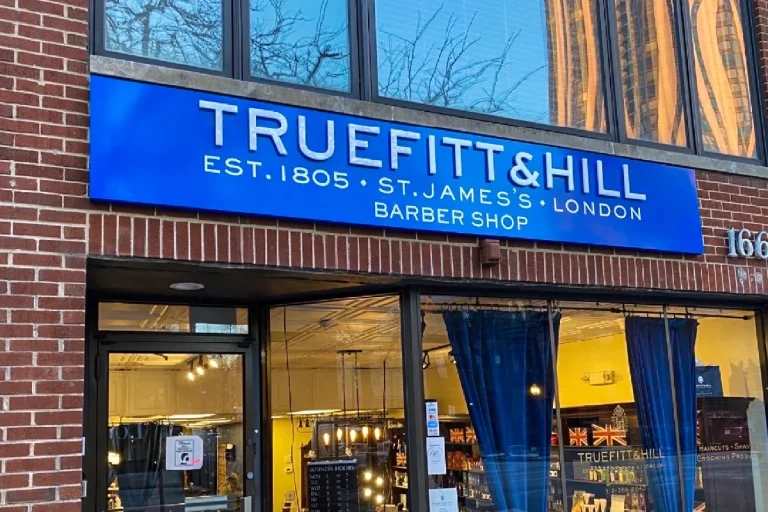
7. Sign Boards
Sign boards are flat panels, usually aluminum composite, PVC, or wood, printed or lettered with your name and mounted on a wall, fascia, or posts. They’re the most budget-friendly permanent option, though they rarely include lighting.
Best for new businesses, service shops, and secondary entrances. See sign boards.
Sign boards also suit businesses that need a clean, readable name fast, such as a new tenant waiting on a permanent lit sign or a back-of-house entrance that only needs identification.
8. Acrylic Signs
Acrylic signs are clear, frosted, or colored panels, often mounted on standoffs with printed or dimensional lettering. They give lobbies, reception desks, and conference rooms a clean, modern look, and some are backlit.
Best for offices, medical practices, and professional firms. See acrylic signs.
Not sure which sign your building allows?
SignFreaks checks your town’s sign code, your landlord’s criteria, and your wall before we design, then shows you the sign on a photo of your own storefront.
9. CNC-Cut Dimensional Signs
CNC router signs are cut from acrylic, aluminum, PVC, wood, or high-density urethane with computer-controlled routers, producing crisp dimensional letters and logos. They work indoors on feature walls and outdoors as non-lit building letters.
Best for lobby logos, hospitality interiors, and architectural lettering. See CNC router signs.
10. Vinyl Banners and Window Graphics
Vinyl banners and window wraps are the flexible end of business signage. Banners announce grand openings, sales, and events, while window graphics carry hours, logos, and promotions on the glass.
Best for temporary messages, new openings, and seasonal campaigns. See custom vinyl banners and window wraps.
Types of Commercial Signs Compared
This side-by-side view shows how the main types of commercial signs differ in placement, lighting, and permits.
| Sign type | Typical placement | Lit? | Permit usually needed? |
|---|---|---|---|
| Channel letters | Building fascia | Usually | Yes |
| Lightbox | Fascia or tenant panel | Yes | Yes |
| Blade sign | Projecting from the wall | Optional | Yes |
| Monument sign | Ground, near the entrance | Optional | Yes |
| Pylon sign | Ground, near the road | Usually | Yes, often with engineering |
| Awning sign | Over doors or windows | Optional | Yes |
| Sign board | Wall, fascia, or posts | Rarely | Usually |
| Acrylic sign | Interior wall | Optional | Rarely |
| CNC-cut letters | Wall or lobby | Optional | Depends on size and placement |
| Banners and window graphics | Windows, fences, walls | No | Depends on the town and duration |
How to Choose the Right Types of Business Signs
Picking between types of signs for business comes down to five questions. Answer them in order, and most of the options narrow down on their own.
- Who needs to see it? Drivers need large letters and lighting, while pedestrians notice signs at eye level and projecting from the wall.
- How far away are they? The United States Sign Council’s legibility guidelines use roughly 30 feet of viewing distance per inch of letter height as an average benchmark, and busy streets need bigger letters still.
- What does the code allow? Every city and village sets its own limits on sign area, height, lighting, and type. The areas served pages cover local rules town by town.
- What does the landlord allow? Shopping centers and office buildings often specify sign type, color, and lighting in the lease.
- When are you open? If customers arrive after dark, a lit sign earns its cost back in visibility.
Good Sign Combinations by Business Type
Most businesses do best with two or three types of signs for business working together. These combinations come up again and again:
- Restaurants. Channel letters on the fascia, a blade sign for the sidewalk, and an awning sign over the entrance or patio.
- Retail in a strip center. Channel letters or a lightbox per the landlord’s criteria, plus a panel on the plaza’s pylon sign.
- Corporate offices. A monument sign at the drive, halo lit letters on the building, and an acrylic or CNC-cut logo in the lobby.
- Medical buildings. A monument sign for wayfinding, building letters, and covered entrances with an entrance canopy.
- New openings. A sign board or banner while the permanent sign moves through permits, then channel letters for the long term.
Permits for Business Signs in Chicago
Most permanent exterior signs need a permit. The City of Chicago’s sign permit rules charge a $200 zoning review fee for an on-premise sign and require engineered drawings for new sign boxes and channel letters. A sign installed before its permit is issued is subject to citation.
Our team prepares the drawings and files the sign permits, builds every sign in our own shop, and handles sign installation with our own crew.
Building the Right Mix of Business Signs
The best types of signs for business are the ones your customers actually see: a primary sign sized and lit for the road, a pedestrian sign at eye level, and flexible graphics for anything temporary, all within your town’s code and your landlord’s rules.
SignFreaks designs, permits, builds, and installs every one of these custom signs for businesses across Chicago and the suburbs. You can see finished work in the portfolio.
Get the right signs for your business
Tell SignFreaks about your building and your customers. We’ll recommend the right sign types, handle the permits, and build and install everything with our own team.
Types of Signs for Business FAQs
What are the most common types of signs for business?
The most common types of signs for business are channel letters, lightbox signs, blade signs, monument signs, pylon signs, awning signs, and sign boards. Channel letters are the most popular permanent storefront sign. Browse all custom signs to compare them.
What is the best sign for a storefront?
The best sign for a storefront is usually lit channel letters on the fascia, paired with a blade sign for sidewalk traffic. If the landlord limits you to a tenant panel, a lightbox is the usual answer.
What is the difference between a monument sign and a pylon sign?
The difference between a monument sign and a pylon sign is height and audience. A monument sign sits low on a solid base for visitors near the entrance, while a pylon sign stands tall on poles for drivers far away.
Do business signs need a permit in Chicago?
Business signs in Chicago need a permit for most permanent exterior work, and signs over the sidewalk also need public way approval. SignFreaks prepares the drawings and files the sign permits for every sign we install.
How many signs does a business need?
A business needs as many signs as it takes to reach drivers, pedestrians, and visitors at the door, which is usually two or three. A primary building sign, a pedestrian sign, and window graphics cover most storefronts.