
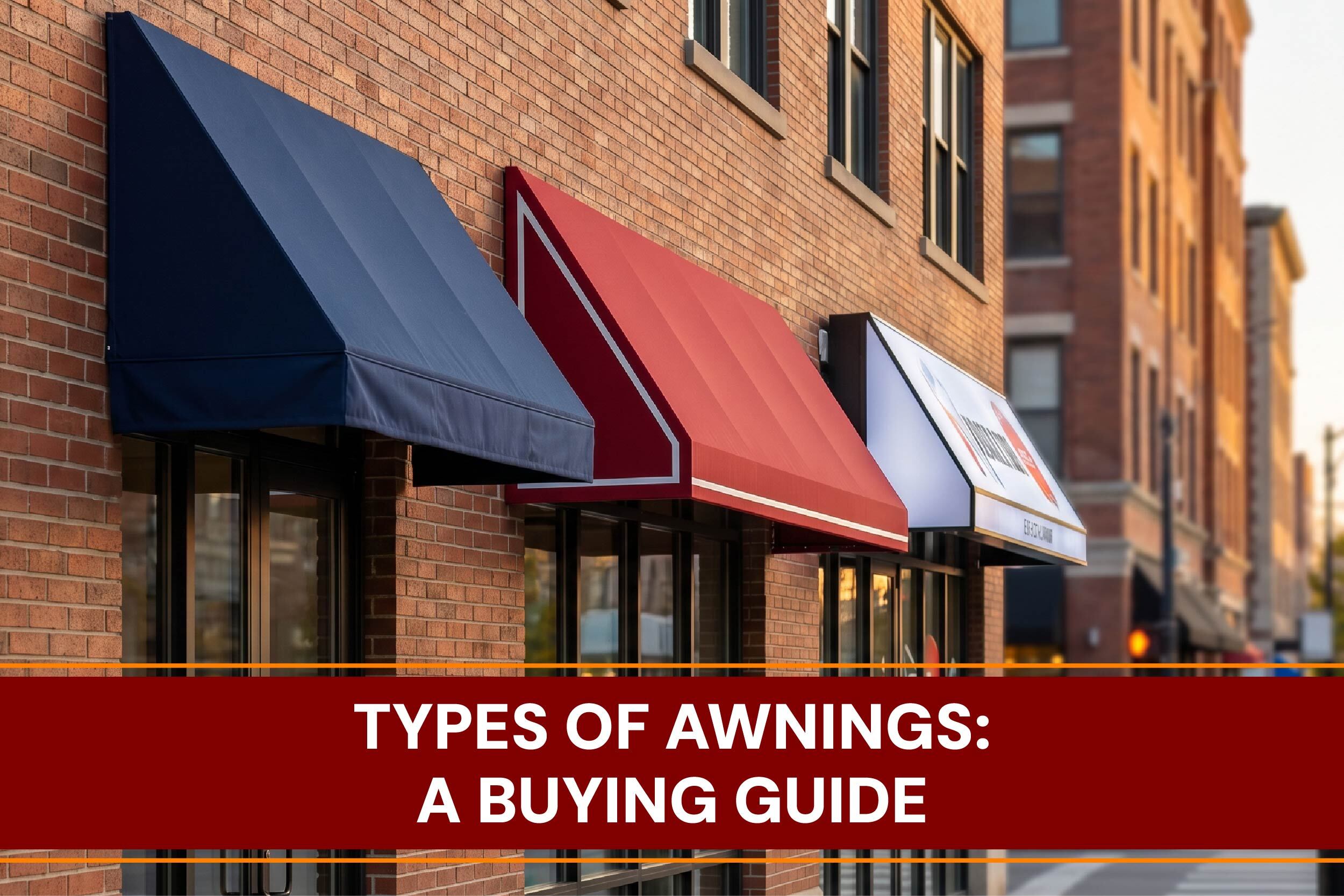
The Ultimate Guide to Types of Awnings: Which is Best for You?
Why Understanding Awning Types Matters Before You Buy
An awning is an exterior covering that provides shade and weather protection while enhancing a building’s visual appearance. When business and property owners begin looking for shade solutions, the conversation often starts with style, color, or branding. But at SignFreaks, we’ve seen time and time again that the most important factor is actually understanding the different types of awnings available before making a purchase.
Many businesses install awnings without fully understanding the structural and functional differences between them. While an awning may look visually appealing, choosing the wrong type can lead to several practical issues.
For example, an installation might not provide enough coverage for the space, or the system may lack the durability required for long-term outdoor exposure. In some cases, property owners invest in awnings that do not adapt to changing weather conditions or outdoor use needs. This can limit functionality and ultimately lead to unnecessary replacement costs.
This guide explores the major types of awnings, explains how each category works, and helps property owners determine which option best supports their building layout, branding goals, usage needs, and long-term performance.
How Awnings Are Classified: Understanding the Main Categories
When people search for awnings, they often focus on aesthetics first. In reality, awnings are primarily classified based on structure and operational functionality, not just appearance.
Understanding this classification helps buyers evaluate which awning category will perform best in their space.
The most common types of awnings include:
- Patio awnings
- Permanent or fixed awnings
- Retractable or adjustable awnings
- Freestanding awnings
- Entrance and doorway canopies
- Window awnings
Each category serves a different purpose. Some awnings provide permanent shade and architectural enhancement, while others offer adjustable coverage that can adapt to weather changes throughout the day.
Understanding the structure makes it easier to match the right system to a building’s needs. For example, a retail storefront may require a permanent awning for branding visibility, while a restaurant patio may benefit more from an adjustable shade system.
The sections below explore each awning category in detail so property owners and businesses can better understand how they function and where they work best.
1. Patio Awnings: Enhancing Outdoor Comfort and Usability
Patio awnings are a highly functional solution designed to transform outdoor areas into comfortable, usable spaces. Commonly installed over patios, decks, and outdoor seating areas, these awnings protect from sun exposure while maintaining an open and inviting environment.
Structural Design
Patio awnings are typically supported by a durable frame system, often constructed from aluminum or powder-coated steel for long-term resistance to weather conditions. The covering material is usually made from high-performance fabrics such as acrylic, Sunbrella Canvas or PVC-coated vinyl, engineered to withstand UV rays, moisture, and temperature fluctuations.
Depending on the design, patio awnings can be either fixed or retractable. Retractable systems are equipped with manual or motorized mechanisms, allowing users to extend or retract the awning based on weather conditions and usage needs.
Advantages for Commercial Properties
Patio awnings are widely used in hospitality and retail settings, particularly for restaurants, cafés, and lounges that offer outdoor seating. They enhance both customer experience and operational flexibility.
Some of the key benefits include:
- Effective reduction of heat and direct sunlight in outdoor seating areas
- Increased seating capacity by making patios usable in various weather conditions
- Enhanced customer comfort, encouraging longer visits and higher engagement
- Opportunity to create a visually appealing and cohesive exterior ambiance
Businesses often utilize patio awnings to maximize their outdoor footprint while maintaining a comfortable and branded environment for customers.
Important Considerations and Ideal for Businesses
Patio awnings should be planned based on space dimensions, sun exposure, and local weather conditions. Retractable systems require routine maintenance to ensure smooth performance and long-term durability.
For Chicago properties, patio awnings are a practical way to maximize outdoor space during warmer months while still maintaining flexibility when the weather changes.
2. Fixed Awnings: A Long-Term Architectural Solution
Among the most widely installed types of awnings, fixed awnings are known for their durability and long-term stability. These awnings are permanently mounted to a building’s exterior and remain extended at all times.
Structural Design
Fixed awnings are built using a rigid internal frame, typically made from aluminum or steel. This frame is securely attached to the building façade and covered with durable materials such as Patio 500 vinyl or Sunbrella canvas.
Because of their permanent structure, fixed awnings become an integrated architectural feature of the building rather than a temporary shade solution.
Advantages for Commercial Properties
Fixed awnings are particularly popular for storefronts and retail environments because they provide consistent shade and strong branding opportunities.
Some of the key benefits include:
- Reliable weather protection throughout the year
- Increased storefront visibility with branded graphics or logos
- Strong structural stability for long-term installations
Businesses often use these awnings to create a recognizable exterior identity while protecting entrances and pedestrian areas.
Applications & Ideal Use
Fixed awnings are best suited for storefronts, building entrances, windows, and walkways where permanent shade and weather protection are required. They are ideal for retail stores, offices, restaurants, and commercial properties seeking consistent branding, enhanced curb appeal, and a durable, low-maintenance solution.
3. Retractable Awnings: Flexible Shade When You Need It
While fixed awnings provide permanent coverage, retractable systems offer a more adaptable solution. These awnings can extend when shade is needed and retract when open sunlight or clear space is preferred.
How Retractable Systems Work
Retractable awnings operate through either manual crank mechanisms or motorized systems that can be controlled with a switch or remote. This allows users to adjust the awning depending on the time of day or weather conditions.
This operational flexibility makes retractable models one of the most versatile types of awnings available.
Ideal Uses for Retractable Awnings
Retractable awnings are particularly popular in environments where outdoor usage changes throughout the day.
Common applications include:
- Restaurant patios and outdoor dining areas
- Residential decks and backyard seating spaces
- Café seating areas along busy streets
By extending shade when needed and retracting during clear weather, these awnings allow property owners to maximize outdoor usability.
Maintenance Considerations
Because retractable awnings include mechanical components, they require occasional maintenance to ensure smooth operation. Despite this, many property owners find that the added flexibility outweighs the maintenance requirements.
4. Freestanding Awnings: Coverage Without Building Attachment
Not every outdoor space allows for a wall-mounted awning installation. In these situations, freestanding awnings provide an effective alternative.
Unlike traditional awnings, freestanding systems are supported by independent columns rather than a building wall.
Independent Structural Support
These awnings function as standalone shade structures, allowing them to be installed in open areas such as courtyards, patios, and pedestrian walkways.
Because they are not attached to a building, freestanding awnings offer greater flexibility in terms of placement and coverage size.
Where Freestanding Awnings Work Best
Businesses often install freestanding awnings in areas such as:
- Outdoor dining spaces
- Event and gathering areas
- Walkways and pedestrian zones
- Parking or waiting areas
Traditional wall-mounted designs reveal how versatile these structures can be. They can essentially function as outdoor shade systems that define and enhance usable space.
However, installation planning is important. Freestanding awnings require adequate space and a stable foundation to ensure structural safety.
5. Entrance and Doorway Canopies: Protection Where It Matters Most
The entrance of a building is one of the most important areas to protect from weather exposure. Entrance awnings, often referred to as doorway canopies, are specifically designed to cover this space.
Improving the Arrival Experience
When customers or visitors approach a building during rain or harsh sunlight, entrance awnings provide immediate shelter. This small architectural feature can significantly improve the comfort and convenience of entering a business.
Hotels, restaurants, retail stores, and office buildings commonly install entrance awnings to create a welcoming transition into the building.
Branding and Visibility
In addition to providing protection, entrance canopies also serve as strong visual markers for commercial properties. Businesses often customize these awnings with their brand colors or logos, making the entrance easier to identify from a distance.
From a branding perspective shows why doorway installations are so valuable. They combine functionality with a strong visual presence.
At SignFreaks, entrance awnings are often designed to integrate seamlessly with the building’s architecture while reinforcing the business identity.
6. Window Awnings: Targeted Shade and Energy Efficiency
Window awnings may appear smaller than other awning types, but they play an important role in improving indoor comfort and energy efficiency.
Managing Sunlight and Heat
Direct sunlight entering through windows can significantly increase indoor temperatures. Window awnings help reduce this effect by blocking a portion of the sunlight before it reaches the glass surface.
This leads to improved temperature control and reduced reliance on air conditioning during warmer months.
Protecting Interior Displays
Retail storefronts frequently install window awnings to protect merchandise displays from excessive sun exposure. These awnings also reduce glare, making it easier for passersby to see products displayed in windows.
Because of these advantages, window awnings remain one of the most practical types of awnings for both residential and commercial buildings.
Key Factors to Consider When Comparing Awning Types
Before selecting an awning system, property owners should evaluate several important decision factors.
Purpose of the Installation
The first step is identifying the primary goal of the awning. Some installations focus on shade and weather protection, while others emphasize branding or outdoor seating coverage.
Available Installation Space
The structure of the building and the layout of the surrounding property will determine which awning types are suitable. Wall strength, outdoor space availability, and architectural design all play a role in the decision.
Operational Preference
Another key factor is whether a permanent or adjustable system is preferred. Fixed awnings provide constant coverage, while retractable systems allow shade to be adjusted based on changing conditions.
Budget and Long-Term Value
Property owners should also consider both the initial investment and long-term maintenance requirements. Some awning systems may cost more upfront but provide greater durability or versatility over time.
Evaluating these factors carefully makes it much easier to choose the right types of awnings for a specific property.
Matching the Right Awning Type to Your Business Needs
Different industries benefit from different awning solutions. The key is selecting a system that aligns with how the space is used.
- Retail storefronts often benefit from fixed awnings because they create consistent shade while displaying the business name and branding.
- Restaurants and cafés frequently choose retractable awnings that allow them to adjust coverage for outdoor dining areas throughout the day.
- Office buildings and hospitality properties commonly install entrance canopies to protect guests and create a professional appearance.
- Meanwhile, outdoor seating areas, courtyards, and event spaces often require freestanding awnings that provide larger coverage areas.
Understanding what an awning is and its types in relation to operational needs helps ensure the installation improves both functionality and customer experience.
At SignFreaks, we guide businesses through this process to help them choose an awning solution that balances durability, aesthetics, and long-term performance.
Explore the Best Awnings in Chicago for Your Needs
The effectiveness of an awning depends not just on its type, but on how well it fits your space, purpose, and surrounding conditions. A well-chosen solution can significantly enhance both functionality and visual appeal.
SignFreaks Awnings Chicago supports your project with:
- Design solutions customized to your property and brand identity
- High-performance materials built to withstand varying weather conditions
- Complete project execution from planning and permits to final installation
- Versatile options suitable for commercial and residential applications
Explore Available Awning Options:
- Fixed Awnings
- Retractable Awnings
- Patio Awnings
Conclusion
Different awning types serve distinct purposes, from permanent architectural coverage to flexible shade solutions. The right choice depends on your space, functionality needs, and branding objectives.
At SignFreaks, we design custom awnings that balance durability, performance, and visual appeal, helping businesses enhance comfort, boost visibility, and create a more inviting exterior. An effective awning is not just about shade, but about long-term value for your property.