
The main types of channel letter signs are front-lit, halo-lit, dual-lit, open-face, and non-illuminated. They differ in how the light leaves the letter. Front-lit reads farthest at night, halo-lit looks refined on smooth walls, dual-lit does both, open-face gives a marquee look, and non-lit letters suit daytime and indoor signs.
Most owners pick from photos. They see a set they like on another storefront, ask for “that one,” and only later learn their wall is too dark for a halo, their landlord wants a raceway, or their village bans the box sign they almost ordered. Knowing the types of channel letter signs before the first quote saves that round trip.
Below, we compare the types of channel letter signs by how they look at night, the wall each one needs, the upkeep it asks for, and where codes and leases push you. If you’re still new to the basics, start with what channel letters are and how they’re built.
- Lighting defines the type. Every set starts as the same aluminum can, and the light path decides the rest.
- The wall picks favorites. Halo letters need a smooth, light surface, while front-lit letters work almost anywhere.
- Codes narrow the list. Some Chicago suburbs ban box signs outright and reward certain types of channel letter signs with extra sign area.
- Finish is a second choice. Trim, face material, and day/night faces change the look within each type.
The Types of Channel Letter Signs Compared
Here’s the short version of each type, side by side:
| Type | How the light gets out | At night | Best wall | Watch for |
|---|---|---|---|---|
| Front-lit | Through a colored translucent face | The whole letter glows | Almost any | Hot spots if LEDs are spaced too far apart |
| Halo-lit | Out the back, onto the wall | A soft glow outlines dark letters | Smooth and light-colored | Dark or rough walls swallow the halo |
| Dual-lit | Through the face and out the back | Bright face plus a halo | Smooth and light-colored | More LEDs and power supplies |
| Open-face | From exposed neon, LED neon, or bulbs | A marquee or vintage glow | Any, often a backer | Exposed parts collect dirt and weather |
| Non-illuminated | No light inside | Dark unless lit from outside | Any | Low visibility after sunset |
Those five types of channel letter signs cover nearly every set you’ll see on a storefront. The sections below explain where each one wins and where it causes trouble.
Front-Lit Channel Letters: The Storefront Standard
Front-lit letters, also called face-lit, have LEDs inside the can and a translucent face on top. The face carries the color, so the whole letter glows at night. Of all the types of channel letter signs, this one reads from the farthest distance after dark, which is why most retail and restaurant signs use it.
Brand colors are easy to match, because the color comes from the face material or a translucent vinyl laid over it. The main thing to check is the LED layout. Modules spaced too far apart leave bright spots and dim gaps on the face, and that unevenness shows the most on wide letters.
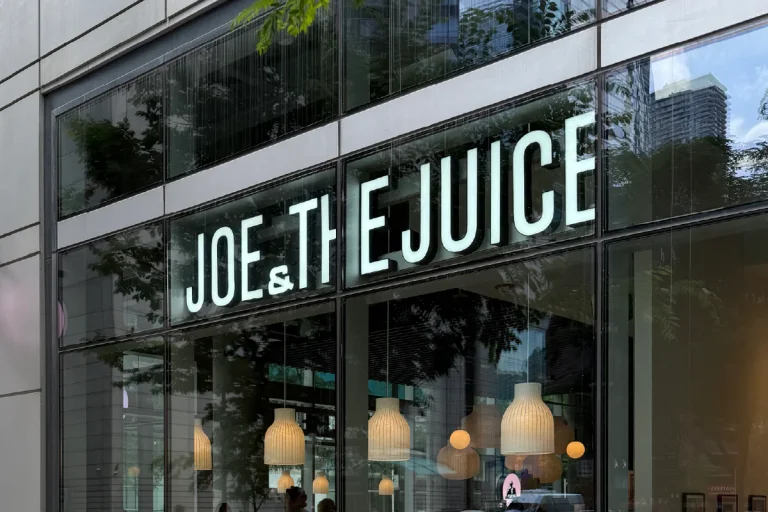
Halo-Lit Channel Letters: Glow on the Wall
Halo-lit letters, often called reverse lit, flip the setup.
The face and sides are solid metal, the back is clear or open, and the LEDs point toward the wall. The letters sit on standoffs, so light spills out behind them and outlines each character in a soft glow. The look of halo-lit signs suits offices, salons, and corporate buildings.
The wall does half the work, so it has to cooperate. A smooth, light surface reflects the halo well. Dark brick, rough stone, and busy textures soak it up. From far away, halo letters read more as a dark shape than a bright one, which is the main trade-off in front-lit vs halo-lit letters.
Some towns reward the look. Lisle’s sign code lets wall signs built from pin-mounted channel letters, or backlit channel letters without an exposed raceway, use 125 percent of the normal maximum sign area.
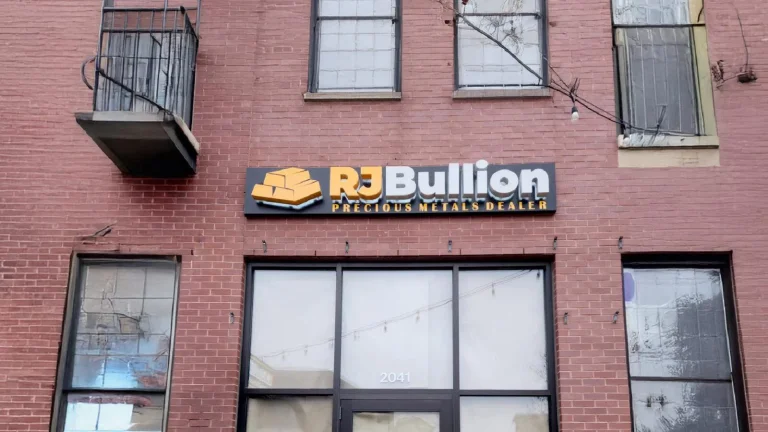
Dual-Lit Channel Letters: Face and Halo Together
Dual-lit letters, also called combination lit or front and back lit, pair a translucent face with an open back. You get a glowing face for distance and a halo for depth. Flagship stores, hotels, and lobbies with high ceilings tend to choose them.
The cost is more lighting. Two light paths usually mean more LED modules and more power supply capacity, and the letters still need a wall that shows off the halo. They make the most sense when the sign is the centerpiece of the facade.
Open-Face Channel Letters: The Marquee Look
Open-face letters leave the light source in view. The can is open at the front, and the glow comes from exposed neon, LED neon, or bulbs set inside it. The result is a vintage, marquee style that fits theaters, bars, diners, and music venues.
Because nothing covers the lighting, dirt, snow, and birds can reach it. Plan on more cleaning, and ask what the light source will be. Glass neon and LED neon look close but age and repair differently, which is the core question in LED vs neon signs.
Not sure which type fits your wall?
Send SignFreaks a photo of your storefront. We’ll check the wall, your town’s sign code, and your landlord’s criteria, then show the right letters to scale on your building.
Non-Illuminated Channel Letters: Depth Without Wiring
Of all the channel letter types, non-lit letters are the simplest. They keep the same depth and shape with no lighting inside. They cost less to run, need no power feed, and suit daytime businesses, interior walls, and buildings that wash the facade with their own lights. Non-illuminated channel letters can be lit later from outside with gooseneck fixtures.
The catch is evening visibility. If your customers drive by after 5 p.m. in winter, an unlit sign can disappear. For lobby logos and smaller wall graphics, flat-cut letters from CNC router signs are a lower-profile option.
Faces, Trim, and Finishes Inside Each Type
Picking among the types of channel letter signs is the first decision. The second is the finish, and it changes the look more than most owners expect:
- Trim cap
- A plastic edge that locks the face to the returns. It’s the classic look, and the cap color can match the face or the returns.
- Trimless
- The face sits flush with the returns, with no visible edge. It reads cleaner and more modern up close.
- Acrylic face
- The common choice for front-lit letters. It holds color well and lights evenly.
- Polycarbonate face
- Tougher against impact, which helps on low signs that people or carts can reach.
- Day/night face
- A special film that looks dark by day and glows white at night, so one color shows in both conditions.
- Metal face
- Solid aluminum or stainless steel. It’s standard on halo letters and gives a polished, upscale look.
Each of these parts shows up on your shop drawing, so it helps to know the names. The parts of a channel letter include the returns, back, face, trim cap, LED modules, and power supply.
How Codes and Landlords Narrow the Types of Channel Letters
Your town and your lease often decide part of the answer before you do. Several Chicago suburbs require individual letters on the wall and rule out cabinets.
Homer Glen’s sign code says wall signs must be channel letters, a business logo sign, or dimensional surface letters, and box signs aren’t a permitted wall sign. Streamwood’s sign guide says all wall signs must be channelized letters, with no box-style signs.
In towns like those, the debate over channel letters vs cabinet signs is already settled. Elsewhere, a lightbox sign may still be allowed, so check the local code first.
Landlords add their own layer. Shopping center sign criteria often name the lighting type, the face color, and the mounting method, and some require a raceway. Mounting changes the look as well, which is why raceway vs flush mount belongs in the same conversation.
Ask for a listed sign. Under NEC Section 600.3, electric signs have to be listed and installed in line with that listing. For lit channel letters, that usually means a UL 48 label, which inspectors look for on site.
Inside the city, all the lit types of channel letter signs go through the same permit steps. Chicago’s sign permit rules list new channel letters among the work that needs sealed drawings, and electrical work needs a registered electrical contractor on the application. SignFreaks prepares those drawings and handles the sign permits on every set.
Matching the Type to Your Building
If you’re still torn between the types of channel letter signs, start with the building and the people who need to read the sign:
- Strip centers and malls. Front-lit letters on a raceway are the usual fit, and center criteria often require them. They also suit shopping mall signs.
- Restaurants and bars. Front-lit letters for reach, or open-face letters for a vintage look.
- Offices and lobbies. Halo-lit or non-illuminated letters on a smooth, light wall.
- Clinics and medical offices. Front-lit letters that read clearly from the parking lot, like many hospital signs.
- Older brick buildings. Front-lit letters, or halo letters on a light backer panel so the glow has something to land on.
Size comes next. Letter height should match how far away people read the sign, and a letter height chart turns that distance into inches. Once the type and size are set, channel letter installation covers the survey, permits, and install day.
Choosing Among the Types of Channel Letter Signs
The right pick among the types of channel letter signs comes down to three things: how far people read your sign at night, what your wall looks like, and what your town and landlord allow. Front-lit letters win on reach, halo-lit letters win on style, and dual-lit letters do both at a higher price. Open-face letters bring character, and non-lit letters keep it simple.
SignFreaks designs, permits, builds, and installs channel letters in Chicago and the suburbs. The channel letter types you choose also drive channel letter cost, along with letter size, mounting, and permits.
Pick the right letters the first time
Tell SignFreaks your address and what your sign needs to do. We’ll recommend the type, size, and finish, then handle the drawings, permit, build, and install.
Types of Channel Letter Signs FAQs
What are the different types of channel letter signs?
The different types of channel letter signs are front-lit, halo-lit (reverse lit), dual-lit, open-face, and non-illuminated. Each one starts from the same aluminum letter and differs in how the light gets out, if any light gets out at all.
Which type of channel letter is most visible at night?
The most visible type of channel letter at night is front-lit, because the whole face glows. Halo-lit letters read as dark shapes with a glow behind them, so they work better for style than for long-distance reading.
Is reverse lit the same as halo-lit?
Reverse lit and halo-lit describe the same type of channel letter. The light shines out the back of a solid-faced letter onto the wall, creating a halo around each character.
Can halo-lit letters go on brick?
Halo-lit letters can go on brick, but dark or rough brick absorbs much of the glow. A light-colored backer panel behind the letters gives the halo a smooth surface and keeps the effect visible.
Do all types of channel letters need a permit in Chicago?
All types of channel letters need a permit in Chicago, and new channel letters require sealed drawings with the application. Lit letters also need a registered electrical contractor. SignFreaks handles the drawings and permits for every set of channel letters we build.