
Signage guides
The Signage Blog: Costs, Permits, and Sign Types
Most signage advice skips what costs you: the permit that delays an opening, the sign type a frontage cannot carry, and the lines behind a quote. SignFreaks answers each one in plain guides from the crew that builds the signs.
- Written by working sign crews
- Chicago and suburban codes
- Cost drivers explained plainly
- Revised when the code changes
Start here
Sign buying guides by topic
The signage blog follows the work our crew does, so every sign buying guide points to the page where that work happens.
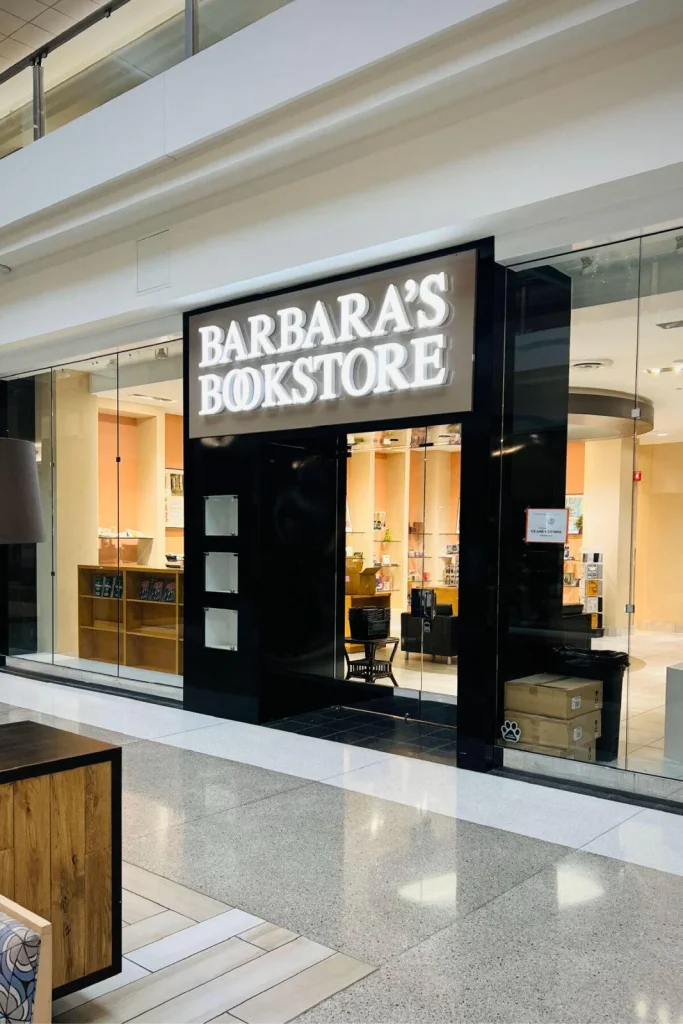
Sign Permits and Codes
What a permit holds up, who files it, and how city and village rules differ.
Learn more
Sign Types and Costs
Which sign suits a frontage, and what size, lighting, and mounting add to a quote.
Learn more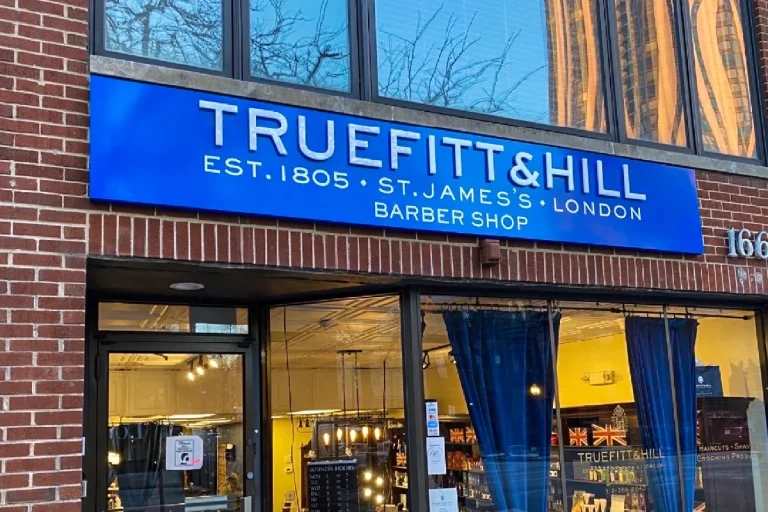
Installation and Repair
How a sign is mounted, why one goes dark, and what a lease-end removal involves.
Learn more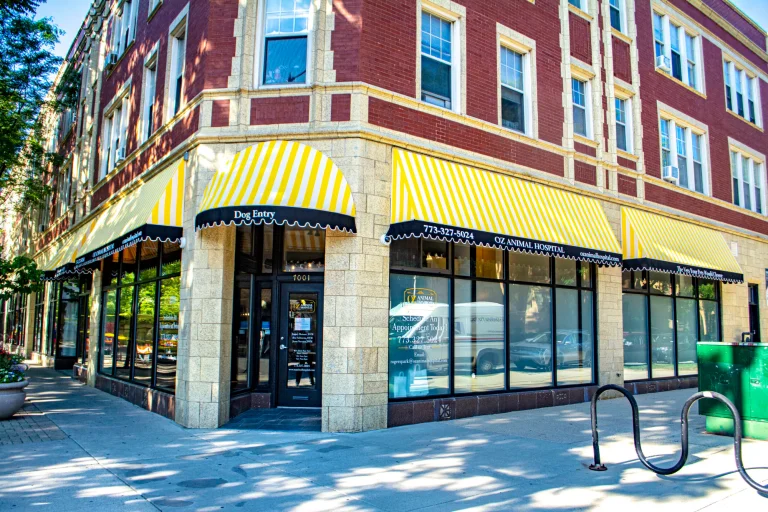
Awnings and Canopies
Frames, covers, and entrances, and what each one needs from the building wall.
Learn more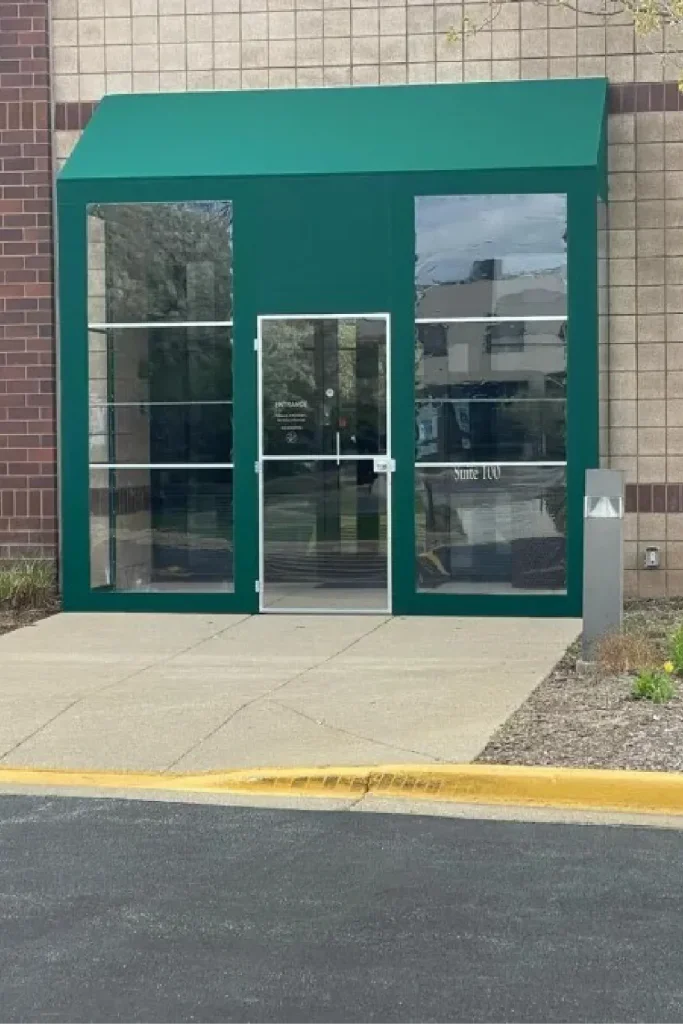
Vestibules and Enclosures
Winter wind control for doorways and patios, and the approvals each one takes.
Learn more
Banners and Wraps
Vinyl, mesh, and wall wraps compared, plus the finishing and hanging each needs.
Learn more
How we write
Signage advice that holds up at the permit counter
Each signage blog guide starts from a question a customer asked, then checks the answer against the code.
What usually goes wrong
- A permit gets one vague line, so a sign goes up first and can be cited afterward.
- One rule is quoted for every town, though each village writes its own sign code.
- Costs are left out, so the first real number arrives after the design is finished.
- Sign types are listed like a catalog, with no word on what the wall or lease allows.
How these guides handle it
- Permits first. Each guide says what needs approval and who files it, so the order is clear.
- Local codes. The city or village rule is named and linked to the town page that covers it.
- Cost drivers. Size, lighting, mounting, and access are named, since each one moves a quote.
- Real sites. Advice comes from the surveys, installs, and repairs our own crew has done.
Local codes
Sign rules change at every village line
The same sign can pass in one town and fail in the next, so each SignFreaks guide names the city or village behind its rule.
- $200Chicago zoning review fee for an on-premise sign
- 8%Streamwood wall-sign cap, as a share of the wall
- 0Box signs allowed in any Oak Brook zoning district
- Chicago
A third of the wall at most
Pedestrian Streets refuse freestanding signs.
A sign over the public way needs its own permit.
- Oak Brook
No box signs in any district
Four 22nd Street towers allow a 250 sq ft name.
Wall signs cap at 5% in office, B1, and B3.
- Streamwood
Eight percent of the wall
Box-style wall signs are not permitted there.
Shopping centers file sign plans with the village.
- Hinsdale
Projecting signs only in B-2
Each face is capped at 3 sq ft and hangs 8 ft up.
A projecting sign is never illuminated there.
Got a question the signage blog skips?
Send SignFreaks a photo of the wall or the sign and your question. If it is a good one we may write it up, and either way you get an answer for your own project.
Coverage
The signage blog for Chicago and the suburbs
SignFreaks has three by-appointment offices, in Chicago, Oak Brook, and Burr Ridge, and works across more than 150 suburbs. The areas served pages list the sign rules town by town.
Questions
Questions about signage
Call (872) 250-4743, Monday to Friday, 8:00 am to 5:00 pm.
Questions we get asked
Where can I find a reliable sign buying guide for a commercial building?
A reliable sign buying guide for a commercial building comes from a team that designs, permits, builds, and installs signs, because the useful details only show up on real projects. The SignFreaks signage blog covers sign types, sign permits, and installation and repair, and each guide names the city or village rule behind its answer.
How much does a commercial sign cost?
A commercial sign costs what its size, lighting, mounting, access, and permit work add up to, so the number comes from a written quote after a site survey. In Chicago the city adds a $200 zoning review fee for an on-premise sign and a building review fee that starts at $50 for a sign under 50 sq ft. We list those fees on their own line beside the sign permits work for every custom sign.
Do I need a permit for a business sign in Chicago?
A business sign in Chicago needs a permit for most permanent exterior work, and a sign installed before its permit is issued can be cited. A sign over the sidewalk or street also needs a Public Way Use permit, while official signs and temporary window signs can be exempt. We check which applies at the survey and prepare the sign permits application.
What types of commercial signs can a business choose from?
Businesses can choose from channel letters, lightbox signs, blade signs, monument signs, awnings, and canopies, plus printed banners and wraps. Each type has its own page covering materials, lighting, and approvals, starting with custom signs, channel letters, and monument signs.
How do I choose the right sign for my storefront?
Choose the right sign for your storefront by starting with the zoning district, the lease, and the wall, because those three set what is allowed before style does. Some districts restrict box signs, so we compare channel letters with lightbox signs early and check the wall before any drawing is made.
What affects how long a sign project takes?
How long a sign project takes depends on the sign, the permit application, and the review comments, so we do not promise a window. The survey, the permit review, the build in our own shop, and the installation each add time, and a rejected application sends the project back to the drawings. The sign installation and sign permits pages show where each step fits.
What is the difference between channel letters and a lightbox sign?
The difference between channel letters and a lightbox sign is the form: channel letters are individual letters, usually lit, while a lightbox is a single box or cabinet with a lit face. Some districts restrict box and cabinet signs, so the choice can come down to the code. See channel letters and lightbox signs for materials and lighting.
Do sign codes differ between Chicago and the suburbs?
Sign codes differ between Chicago and the suburbs, because the city and every village write their own rules for size, height, lighting, and sign type. Oak Brook, for example, bans box signs in every district, while Chicago limits them by district. The Oak Brook and areas served pages cover the local rules.
Where can I ask a signage question the guides do not cover?
You can ask a signage question the guides do not cover by calling SignFreaks at (872) 250-4743, Monday to Friday, 8:00 am to 5:00 pm, or by sending a photo through the quote form. Good questions often become a guide, and either way you get an answer for your own project.
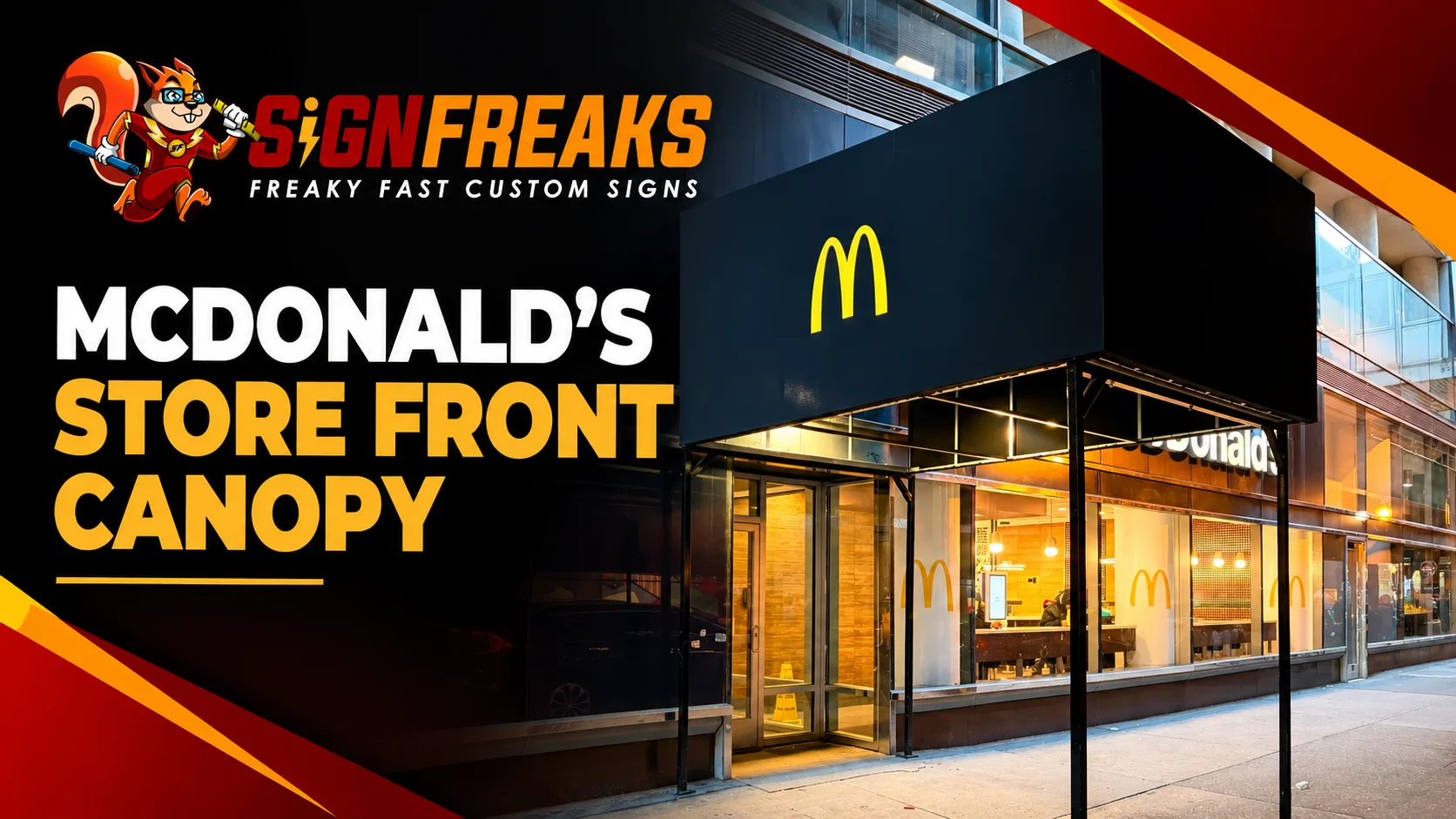
McDonald’s Storefront Canopy in Chicago: A LaSalle Street Case Study
Project summary SignFreaks engineered, permitted, fabricated, and installed a branded storefront canopy for the McDonald’s at 203 N. LaSalle Street in the Chicago Loop. It uses…
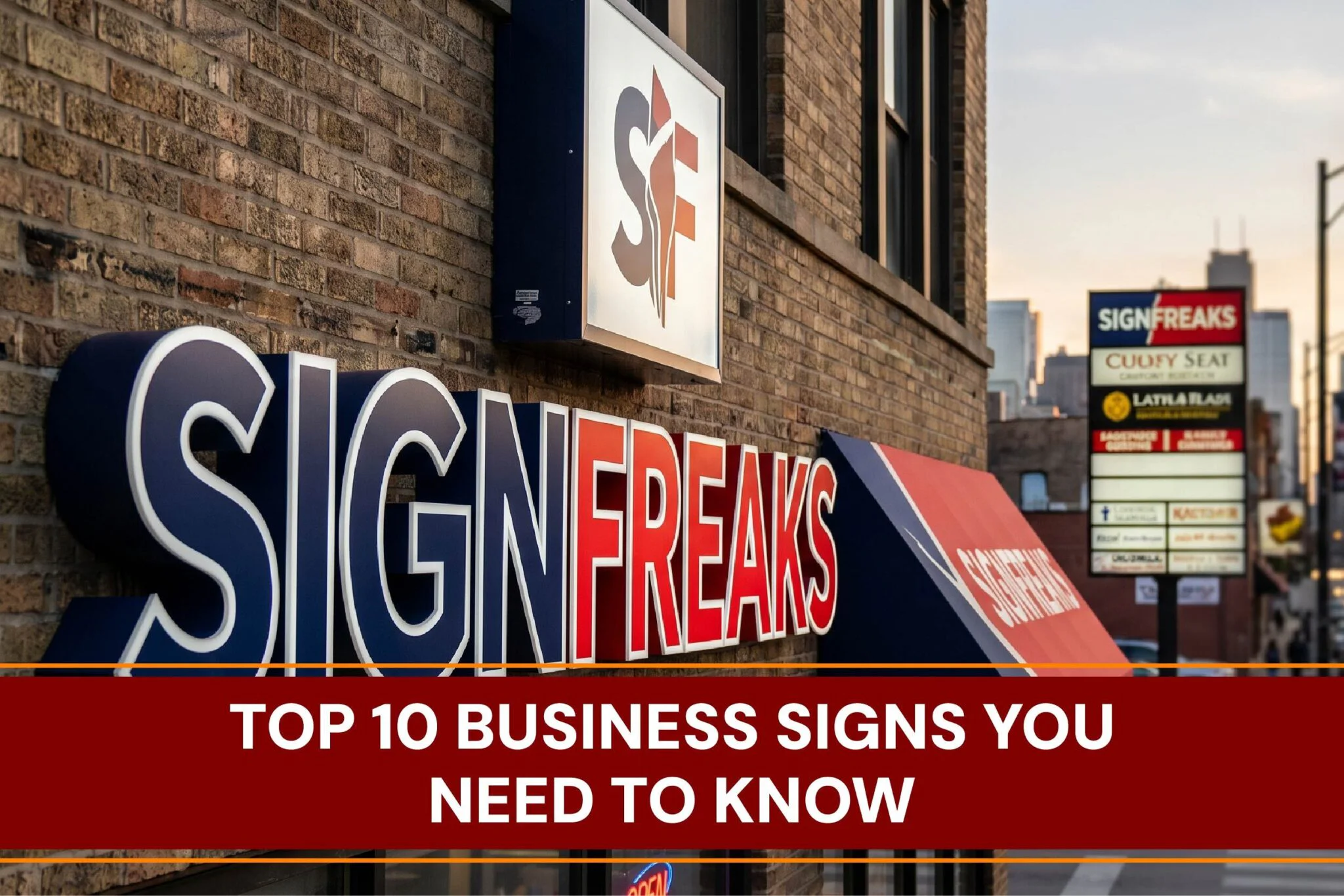
Types of Signs for Business: 10 Options and Where Each One Works Best
Quick answer The main types of signs for business are channel letters, lightbox signs, blade signs, monument signs, pylon signs, awning signs, sign boards, acrylic signs,…
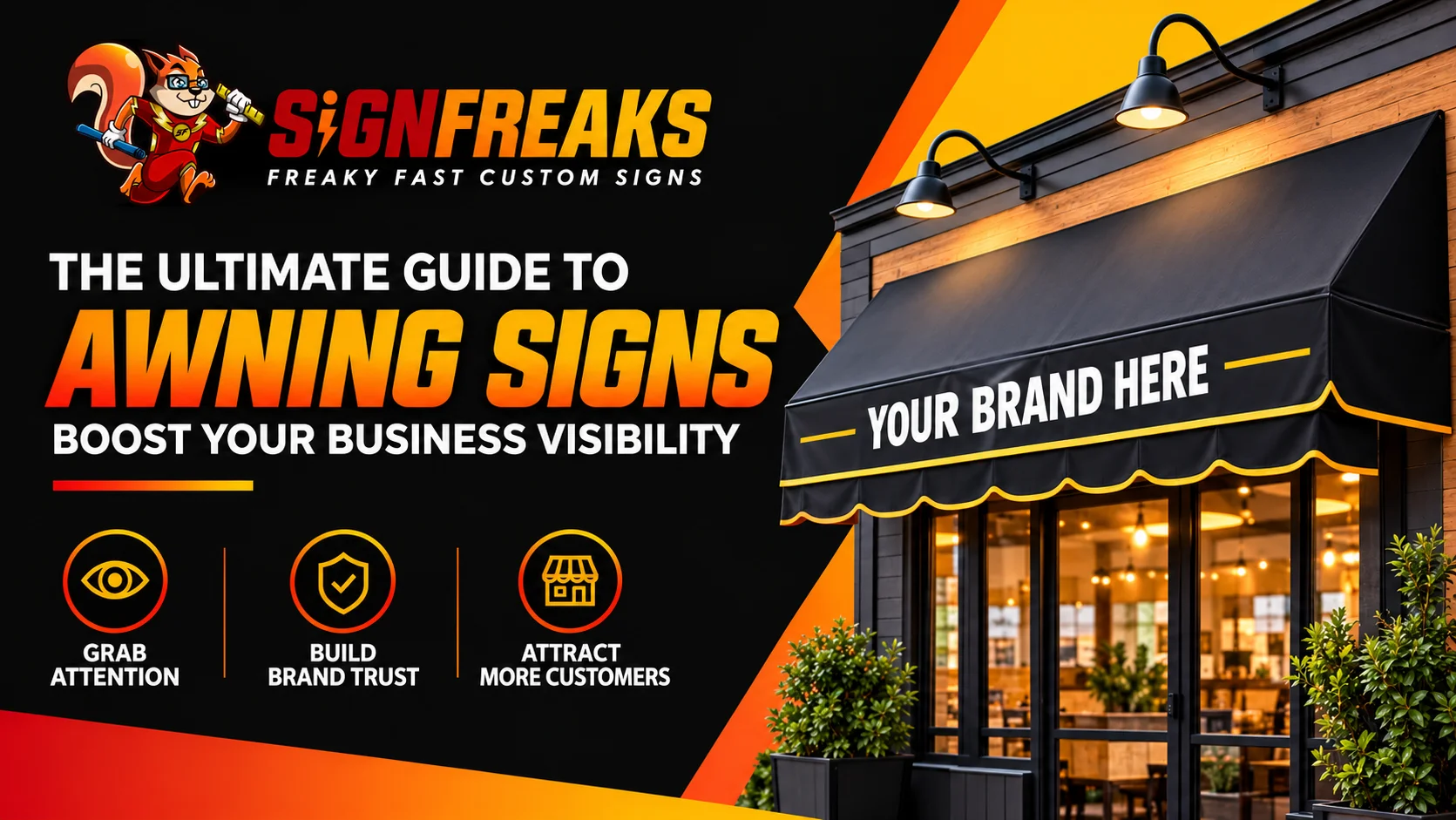
How to Design a Storefront Awning That Sells
Quick answer Awning signs are commercial awnings that carry a business name, logo, or message on the fabric or frame. Good store awning design comes down…
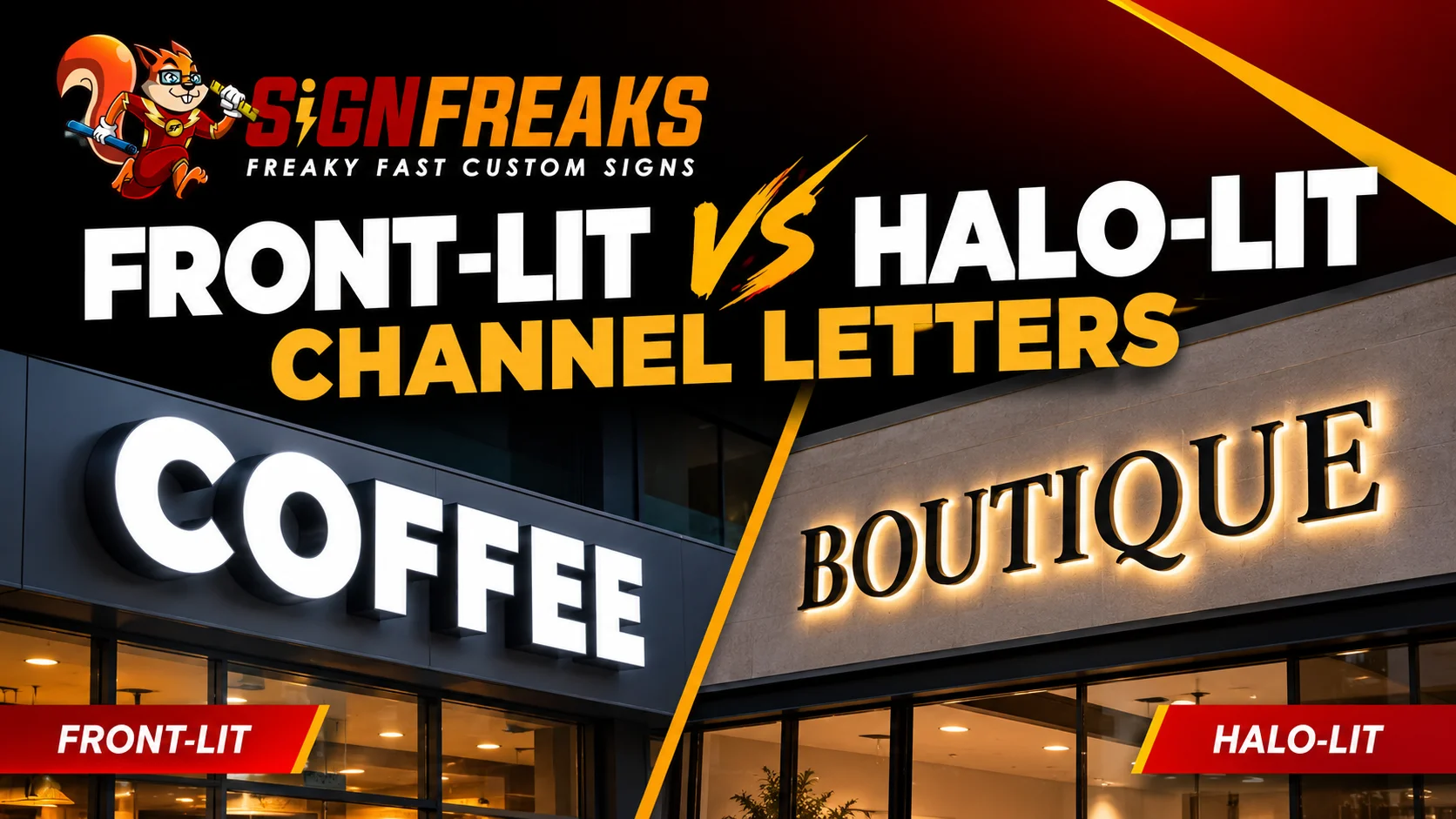
Halo Lit Channel Letters vs Front Lit: Which Style Fits Your Building?
Quick answer Front lit channel letters shine through a colored acrylic face, so they read brightest and farthest, which suits retail strips and busy roads. Halo…
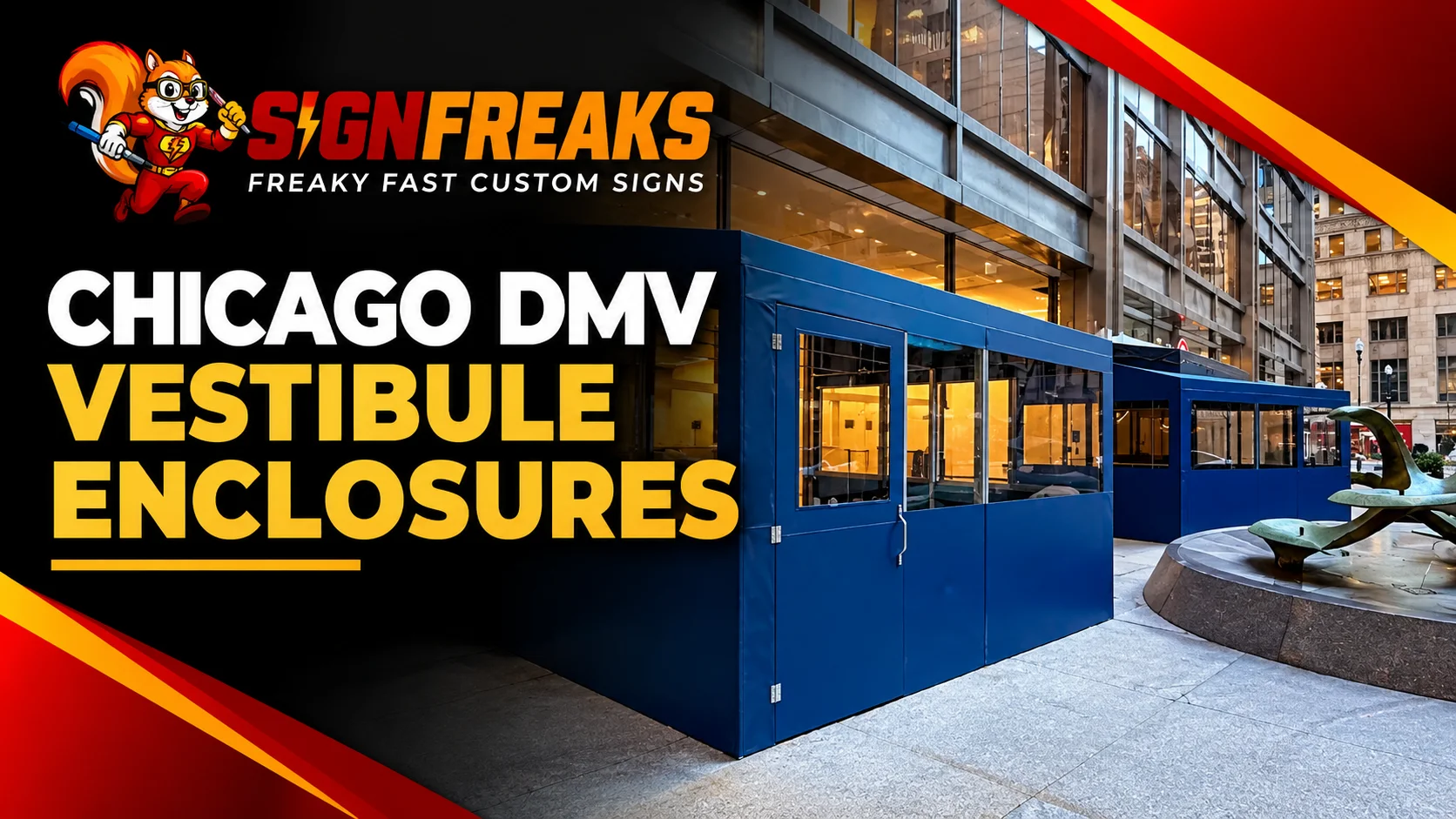
Vestibule Enclosures for the Chicago DMV: Two Winter Entrances for the State’s Flagship Center
Project summary SignFreaks designed, fabricated, and installed two custom vestibule enclosures for the Illinois Secretary of State’s flagship center at 125 West Monroe Street in Chicago’s…
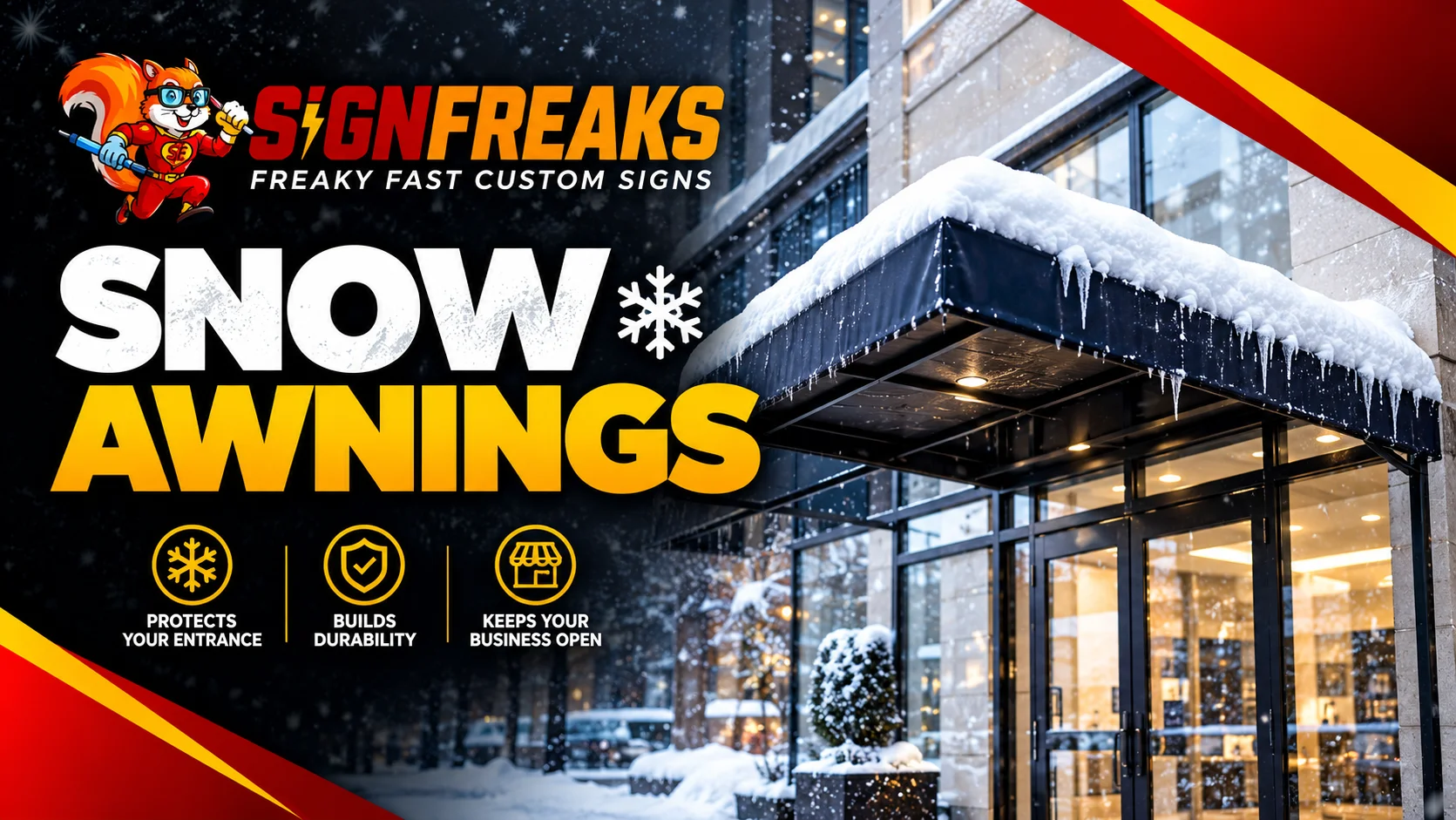
Snow Awnings: How to Choose an Awning That Survives a Chicago Winter
Quick answer Snow awnings are fixed commercial awnings built to carry winter weight: a steel or heavy aluminum frame, a steep pitch that sheds snow, internal…
What Are Channel Letters? A Buyer’s Guide to Types, Parts, and Sizing
Quick answer What are channel letters? They’re individually built, three-dimensional letters, usually aluminum, mounted one by one on a building to spell a business name or…
Types of Awnings: A Commercial Buyer’s Guide to Choosing the Right One
Quick answer The main types of awnings for businesses are fixed awnings, freestanding awnings, entrance awnings, window awnings, patio awnings, and walkway canopies. Each comes in…