
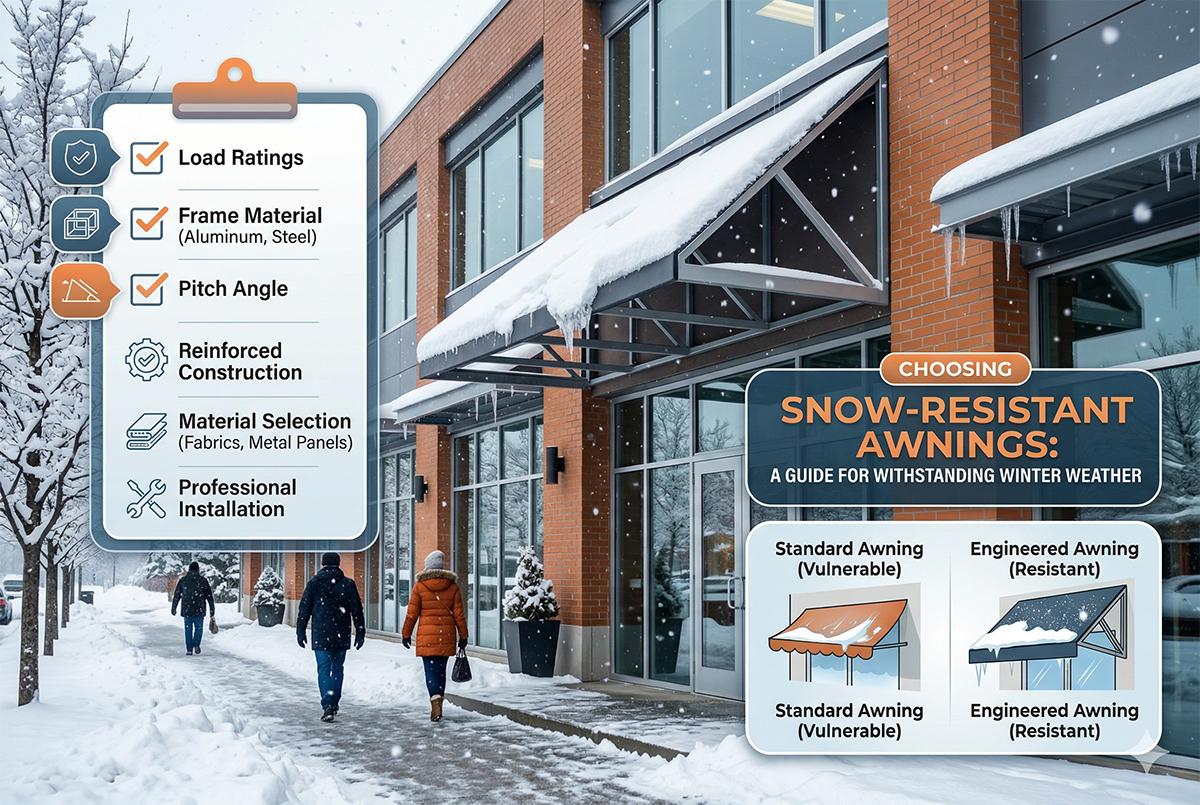
Choosing Awnings That Can Withstand Snow: What You Need to Know
Introduction
For businesses in cities like Chicago and other snow-prone regions, investing in awnings that can withstand snow is essential. Selecting the right design and materials helps protect the building, maintain a professional storefront appearance, and ensure long-term durability throughout the winter months. Heavy snowfall can cause serious structural damage to exterior building elements, especially awnings. While awnings are typically installed to provide shade, enhance storefront visibility, and protect entrances from rain, snow introduces a completely different level of pressure.
As snow accumulates on the surface of an awning, the weight increases rapidly. What begins as a light layer of snow can quickly become a heavy load as snowfall continues or as moisture turns dry snow into dense, wet snow. Without proper structural support, this weight can strain the awning frame, stretch the fabric, and weaken mounting points attached to the building. Many standard awnings are not designed to handle these winter conditions. As a result, businesses often face problems such as collapsed frames, torn fabric, and costly mid-season repairs. In busy commercial areas, damaged awnings can even pose safety hazards for customers entering the storefront.
This guide explains how to choose awnings engineered to handle snow load, freezing temperatures, and winter storms while maintaining both functionality and visual appeal.
Understanding Snow Load: The Hidden Factor Most Businesses Ignore
One of the most important factors in awning durability is snow load, yet it is often overlooked during the design and installation process. Snow load refers to the total weight that accumulated snow places on a structure.
Although individual snowflakes are light, the weight increases dramatically as snow continues to build up on flat surfaces. When snowfall becomes dense or partially melts and refreezes, the pressure on an awning can grow quickly.
Another key factor is the difference between dry snow and wet snow. Dry snow is lighter and tends to slide off surfaces more easily, while wet snow contains higher moisture levels and can be significantly heavier. In many winter storms, snow begins as dry powder but eventually becomes wet and dense, increasing the stress placed on exterior structures.
When awnings are not designed to handle these conditions, businesses may experience several structural problems, including:
- sagging or bending awning frames
- mounting bracket failure
- fabric stretching or tearing
- structural distortion over time
Because of these risks, commercial properties located in snowy climates must prioritize structural engineering when selecting exterior installations. Choosing awnings that can withstand snow ensures the structure is built to manage snow load safely while maintaining long-term reliability.
Key Structural Features That Help Awnings Survive Heavy Snow
The ability of an awning to handle winter conditions depends largely on the engineering behind its structure. High-quality commercial awnings incorporate several design features that improve strength, stability, and long-term durability in snowy climates.
Reinforced Frame Construction
One of the most important elements is the frame. Reinforced metal frames made from steel or heavy-duty aluminum provide the stability necessary to support additional weight during snowstorms. These materials are widely used in commercial construction because they resist bending, corrosion, and structural fatigue, allowing the awning to maintain its integrity over time even under repeated winter stress.
Secure Mounting Systems
Mounting systems also play a crucial role in winter performance. Awnings must be firmly attached to the building façade using durable brackets and properly rated anchor bolts. Weak or poorly installed mounting hardware can loosen when subjected to heavy snow loads and strong winter winds, increasing the risk of structural failure. Professionally engineered mounting systems ensure the awning remains securely connected to the building structure.
Internal Crossbar Reinforcement
Internal reinforcement further improves stability. Crossbar support structures distribute weight evenly across the awning frame instead of allowing pressure to concentrate in a single area. This balanced load distribution prevents sagging and helps the awning retain its original shape even when snow begins to accumulate on the surface.
Angled Frame and Slope Design
Another important factor is slope design. Awning frames engineered with an angled structure allow snow to slide off naturally rather than collecting on the surface. When combined with high-tension fabric systems that maintain a tight surface, this slope significantly reduces the chances of heavy snow buildup.
Together, these structural components create awnings capable of handling winter conditions more effectively. When properly designed, fabricated, and installed, commercial awnings can continue to perform reliably throughout harsh winter weather without compromising safety or durability.
Best Commercial Awning Designs That Can Withstand Snow
Certain awning designs perform significantly better in snowy climates because they naturally reduce snow accumulation and distribute weight more effectively. Businesses located in regions with heavy snowfall should consider designs specifically suited for winter durability.
Some of the most reliable options include:
- Steep-Pitch Awnings: Their sharp angle allows snow to slide off quickly before it accumulates into a heavy load.
- Rigid Metal Canopies: Constructed from metal panels and reinforced frames, these can handle heavier snow loads than many lightweight fabric systems.
- Supported Entrance Canopies: Vertical supports transfer part of the structural load to the ground, providing additional strength for commercial entrances.
- Frame-Supported Fabric Awnings: Unlike retractable awnings, these include rigid internal frames that maintain fabric tension and improve durability.
Flat awnings or low-angle designs are generally the least suitable for snowy environments. Because snow cannot slide off easily, it tends to accumulate on the surface and place significant stress on the structure.
Selecting awnings that can withstand snow ensures the design supports both structural durability and long-term storefront functionality.
Materials That Perform Best in Snow and Freezing Temperatures
Cold climates place significant demands on awning materials. Freezing temperatures, moisture exposure, and repeated freeze-thaw cycles can gradually weaken lower-quality components. Choosing durable materials is essential for long-term performance.
- Powder-coated aluminum frames are widely used in commercial awnings because they combine strength with corrosion resistance. The powder coating protects the metal from moisture and prevents rust caused by snow and ice exposure.
- Galvanized steel is another excellent option for heavy-duty applications. Steel structures offer higher load-bearing capacity and are often used for large commercial entrance canopies that must withstand substantial snow accumulation.
- Fabric selection is equally important. Vinyl-laminated fabrics are commonly used in commercial awnings because they resist moisture penetration and maintain flexibility even in colder temperatures. This flexibility helps prevent cracking when temperatures drop significantly.
- Seam construction also plays a role in winter durability. Weather-resistant stitching prevents water from entering the fabric and freezing inside the seams. Over time, this protection helps prevent tearing or structural weakening.
When businesses invest in awnings that can withstand snow, choosing materials specifically designed for cold weather ensures the installation remains durable throughout many winter seasons.
Common Winter Damage Problems and How the Right Awning Prevents Them
Awnings that are not designed for winter climates often experience several types of damage once snowfall begins. Snow accumulation places constant pressure on the structure, which can gradually weaken both the frame and the fabric.
Common winter problems businesses encounter include:
- frame bending caused by heavy snow buildup
- fabric sagging under accumulated weight
- mounting brackets loosening over time
- water freezing inside seams
- icicle formation damaging fabric edges
These issues often occur when awnings lack proper structural reinforcement or when materials are not suited for freezing temperatures.
Well-engineered awnings address these risks through reinforced frames, strong mounting systems, and carefully designed slopes that allow snow to slide away from the structure. Businesses that install awnings that can withstand snow significantly reduce the likelihood of costly repairs or winter-related structural damage.
Maintenance Tips to Protect Your Awning During Winter
Even durable awnings benefit from regular maintenance during the winter months. Preventative care helps reduce structural stress and extends the lifespan of the installation.
Business owners should periodically inspect their awnings during winter to ensure all components remain secure and functional.
Helpful maintenance practices include:
- removing excessive snow buildup after major storms
- inspecting the frame and mounting hardware before winter begins
- ensuring proper drainage for melting snow
- scheduling seasonal inspections with professionals
Routine maintenance not only protects the awning structure but also helps businesses maintain a safe and welcoming entrance for customers during winter.
Why Professional Fabrication Matters in Snowy Cities
Installing an awning in a snow-prone region requires more than choosing an attractive design. Structural engineering, material selection, and proper installation are all critical factors in ensuring the awning performs safely throughout winter.
Professional awning manufacturers evaluate several variables before fabrication begins, including building structure, mounting surfaces, and expected snow load. These considerations allow experts to design awnings specifically engineered for local climate conditions.
Experienced installers also ensure that the awning meets building codes and safety standards. Proper mounting systems and reinforced structural components significantly reduce the risk of damage during heavy storms.
SignFreaks specializes in designing and installing commercial awnings that can withstand snow, combining structural durability with attractive storefront design. Their expertise allows businesses to install awnings that not only enhance branding but also perform reliably during harsh winter weather.
Conclusion: Invest in Awnings Built for Winter Durability
For businesses located in snowy regions, awning durability is more than a design consideration. It is a structural necessity. Snow accumulation can place significant pressure on exterior structures, making proper engineering essential when selecting an awning.
Strong frames, properly angled designs, and cold-resistant materials all contribute to long-term performance. When these elements are combined with professional fabrication and installation, awnings remain stable and reliable even during heavy winter storms.
Investing in awnings that can withstand snow helps businesses protect their storefronts, reduce maintenance costs, and maintain a professional appearance throughout the winter season.
By working with experienced providers like SignFreaks, businesses can ensure their awnings are designed with both durability and visual impact in mind creating storefront solutions that stand strong through every season.