
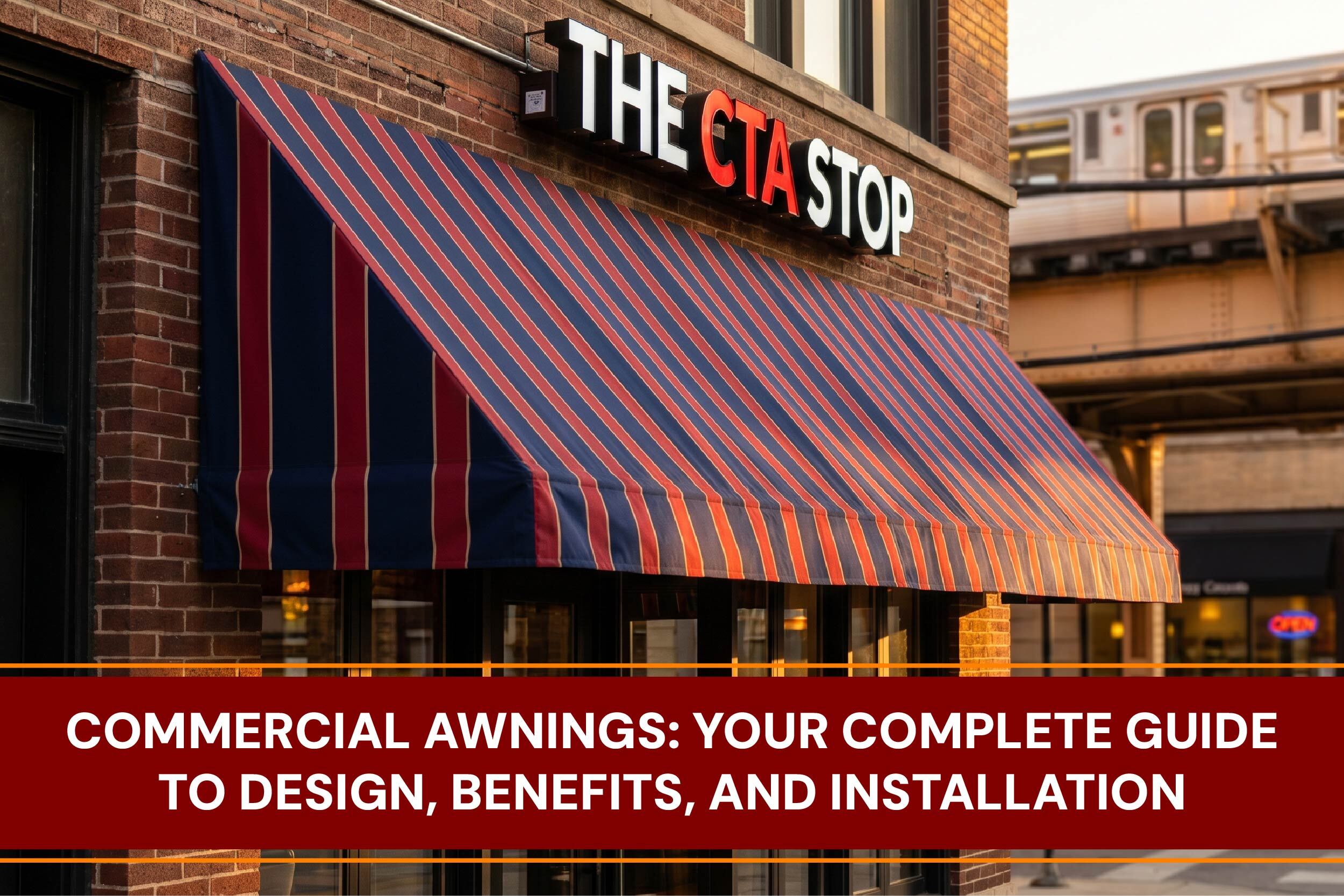
Commercial Awnings: Your Complete Guide to Design, Benefits, and Installation
Commercial awnings remain one of the most reliable investments for businesses that want to elevate curb appeal, enhance customer comfort, and promote brand visibility. In a competitive market like Chicago, a well-designed awning is far more than a shade structure it becomes a strategic marketing asset that reinforces brand identity from the moment customers approach your storefront.
This Commercial Awnings Guide covers everything you need to know: how commercial awnings boost visibility, the design principles that influence performance, available fabric types, installation considerations, branding opportunities, and the factors that impact cost. Whether you are opening a new business or upgrading your existing storefront, this guide provides a clear path to choosing the right commercial awning with confidence.
Why Commercial Awnings Matter for Modern Businesses
A commercial awning enhances your building façade, but its benefits extend far beyond aesthetics. Businesses rely on awnings to create a more welcoming entrance, attract walk-in traffic, support outdoor seating or waiting areas, and make their brand instantly recognizable on a busy street.
Restaurants use awnings to define patio spaces, cafés rely on them for shade and ambience, and retail shops leverage them as eye-level billboards. In cities like Chicago, where seasonal weather conditions can be unpredictable, awnings provide year-round practicality while strengthening brand presence at street level.
How Commercial Awnings Boost Visibility and Branding
Visibility is often the deciding factor between a passerby walking in or passing by. Awnings naturally draw attention because they project outward from the building and sit within a pedestrian’s direct line of sight.
A few key visibility advantages include:
- Large, customizable surfaces that act as high-impact signage.
- Improved street presence, especially on dense commercial corridors.
- Eye-level placement makes the brand more memorable and easier to recognize.
- Better customer experience, as guests associate your business with comfort, shade, and shelter.
Branding techniques on commercial awnings such as bold typography, custom colors, and logo placements, help businesses create a cohesive brand identity. When paired with proper lighting, graphics, or illumination, an awning serves as both a functional element and a strategic advertising tool.
Design Principles That Shape an Effective Commercial Awning
Designing a commercial awning requires more than selecting a fabric and printing a logo. A well-planned awning must complement your architecture, align with your brand identity, withstand weather conditions, and comply with local regulations.
Below are the core design principles to guide the process:
1. Style and Structure
Different awning styles suit different purposes. Dome, shed, concave, convex, and waterfall awnings offer distinct shapes that influence how the structure interacts with your storefront. The right form enhances both visual impact and functional performance.
2. Color and Branding Strategy
Color selection should reflect your brand guidelines while ensuring strong contrast for readability. Businesses often choose bold, high-contrast color combinations that stand out from the surrounding environment.
3. Material Durability
Fabric selection affects both longevity and maintenance. The most common fabric types include:
- Acrylic fabric is long-lasting and vibrant.
- Vinyl-coated fabric is water-resistant and ideal for printed graphics.
- Polyester blends being cost-effective and UV-resistant.
Each option provides unique benefits, especially when paired with Chicago’s variable climate.
4. Integration with Existing Architecture
Awnings should enhance the building façade rather than compete with it. Proper scale, projection depth, and alignment ensure your awning contributes to a cohesive streetscape.
5. Lighting Enhancements
Adding LED lighting or under-canopy illumination increases nighttime visibility, extends usability, and ensures your brand stays visible 24/7.
Types of Commercial Awnings for Business Use
Commercial awnings come in a wide range of configurations, each tailored to serve specific operational and aesthetic needs.
Fixed Awnings
These permanent structures offer stability and long-term durability, ideal for storefronts, entryways, and window shading. They are built with welded frames and durable fabric covers designed to withstand year-round weather.
Retractable Awnings
Retractable systems provide flexibility, allowing businesses to extend or retract the awning based on weather conditions. They are especially popular in restaurants, cafés, and outdoor seating environments.
Backlit or Illuminated Awnings
Featuring internal lighting and translucent fabric, these awnings serve as illuminated signs at night. They significantly enhance visibility, making them ideal for businesses operating after dark.
Custom-Designed Awnings
Fully tailored options include branding graphics, unique shapes, multi-panel structures, and integrated lighting. These are ideal for businesses looking for a distinct storefront presence.
Guide to Choosing the Right Commercial Awning
Selecting a commercial awning involves balancing aesthetics, functionality, and long-term value. Before making a decision, consider the following:
Your Business Type
Restaurants benefit from retractable or illuminated awnings, while retail shops often prefer fixed structures for durability and branding.
Foot Traffic and Visibility Requirements
High-traffic streets call for bold, highly visible awnings. A unique shape or illuminated design can further distinguish the storefront.
Brand Identity
Your awning should reinforce your color palettes, typography style, and overall branding strategy.
Climate and Environmental Considerations
Chicago’s wind, snow, and seasonal weather shifts require strong frames, reinforced fabrics, and proper engineering.
Installation Process for Commercial Awnings
Installing a commercial awning involves several coordinated steps to ensure structural integrity, code compliance, and longevity.
Site Assessment
Professionals evaluate the building façade, mounting surface, wind exposure, and available space to determine the appropriate awning type and installation method.
Engineering & Design Review
Engineering specs include load calculations, structural support requirements, and material configurations. Final design plans also account for branding, graphics, and lighting.
Permit Acquisition
Chicago and the surrounding suburbs require permits for most commercial awnings. These guarantee safety, compliance with building codes, and proper mounting practices.
Fabrication
Frames are welded, fabrics are cut and printed, and any lighting elements are integrated during fabrication.
Installation
The final installation involves mounting the frame, securing all hardware, tensioning fabric, and conducting safety inspections.
A professional installer ensures that all elements structure, graphics, lighting, and weatherproofing perform as intended.
Cost of Commercial Awnings: What to Expect
The cost of commercial awnings varies depending on size, materials, customization, illumination, and installation complexity. While standard entryway awnings fall at the lower end of the price range, custom-shaped or illuminated awnings can increase the investment.
Key price factors include:
- Structural materials
- Fabric type and graphic printing
- Custom shapes or branding
- Lighting elements
- Engineering and permit fees
- Installation requirements
Investing in a professionally built awning provides long-term value through durability, reduced maintenance costs, and years of strong visual impact.
Why Businesses Choose SignFreaks for Commercial Awnings in Chicago
SignFreaks specializes in premium-quality commercial awnings tailored to the needs of Chicago businesses. From design to fabrication to installation, every project is handled with precision, industry expertise, and a strong focus on structural safety.
Our services include:
- Custom commercial awning design
- High-quality fabrication using durable materials
- Full-color graphics and branding applications
- Engineering support and permit handling
- Professional installation across Chicago
With over 25 years of experience, we deliver awnings designed to elevate visibility, enhance curb appeal, and reinforce brand presence in even the most competitive commercial corridors.
Ready to Transform Your Storefront with a Custom Commercial Awning?
Enhance visibility, elevate your brand, and create a welcoming experience for every customer.
SignFreaks delivers custom commercial awnings built to stand out and withstand Chicago’s climate.
Contact our team today to get started.
Conclusion
From enhanced curb appeal and improved customer experience to energy efficiency and brand visibility, commercial awnings remain one of the most effective exterior upgrades for businesses. This Commercial Awnings Guide provides the clarity you need to evaluate materials, design features, installation methods, and cost considerations, ensuring you select the ideal solution for your property.